

[F-16 Fighter Aircraft Operations Manual] 8. Cockpit Environmental Control and De-icing System Operations
Release time: 2026-05-09
The ECS (Electronic Control System) integrates air conditioning and pressurisation functions, supplying temperature-controlled, stabilised air to multiple systems, including cabin heating, cooling and ventilation; windscreen demisting; cabin pressurisation; canopy sealing; anti-G suit inflation; fuel tank pressurisation; electronic equipment cooling; and pressurised breathing.
When the air supply selector knob is set to the OFF or RAM position, most functions will be disabled.
When the environmental control system loses power:
The cabin temperature control system has failed (only unregulated cold air is available); the de-icing function of the moisture separator has ceased to operate; in humid airspace below 30,000 feet (9,100 metres), the condensate drain line of the moisture separator may freeze; the system’s built-in bypass valve opens automatically to maintain basic ventilation for the cabin and avionics equipment.
An electrical fault will not cause the bleed air supply to be interrupted; all pressurisation functions that rely on bleed air (servo air, canopy seal, anti-G suits, pressurised breathing and fuel tank pressurisation) will continue to operate normally, as the bleed air system itself is not electrically powered.
Air conditioning system
The engine bleed air is cooled by passing through the turbocharger and the charge air heat exchanger. The cabin thermostat automatically regulates the temperature using signals from temperature sensors and the manual control panel; the conditioned air enters the cabin via vents on the sides and top of the seats, the instrument panel vents, and the windscreen defroster.
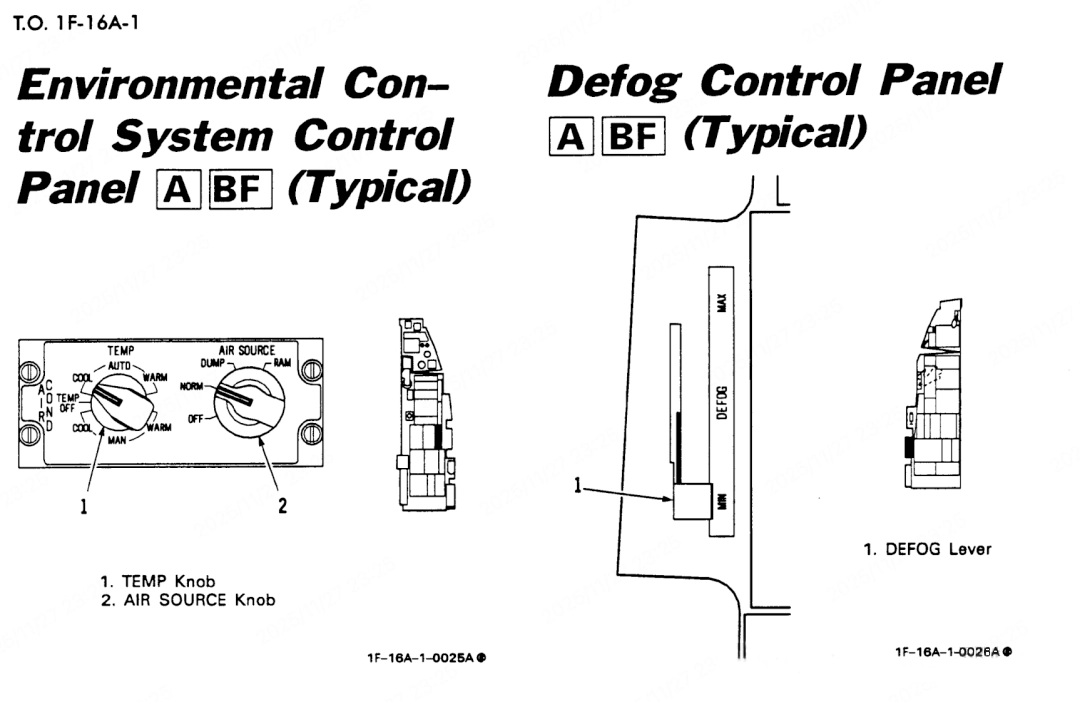
The cabin climate control panel, as shown in the image above, is located in the centre of the right-hand console; button 1 is the air conditioning knob, button 2 is the air flow knob, and the image on the right shows the demister control panel.
Air conditioning control knob specifically designed to regulate the cabin temperature:
AUTO: Automatically maintains a constant cabin temperature (15–27°C) based on the setting selected via the dial
MAN: Manually adjusts the air control valve opening; the cabin temperature varies dynamically according to throttle position, outside temperature and cabin heat load. When the WARM position is selected, the supply air temperature may exceed the 82°C limit, causing the heating valve to cycle on and off (this is normal; lowering the setting will resolve the issue)
TEMP OFF: Disables hot air mixing, supplying only approximately 2°C cool air to the cabin
Under extreme temperature conditions, system performance can be enhanced by increasing engine speed by 1–3% above idle, thereby boosting bleed air pressure and flow. Switching off radar equipment reduces the system’s thermal load and improves cabin cooling. Operating the radar in standby mode generates additional heat from the electronic equipment, which can assist with cabin heating.
Air supply knob: Its function is as follows:
OFF: Close the engine bleed valve; all air conditioning, cooling and pressurisation functions are suspended (including anti-G suits, pressurised breathing, canopy sealing and fuel tank pressurisation systems)
NORM: Activate automatic temperature and pressure regulation mode; maintain environmental control according to preset parameters
Demisting procedure
The anti-fog control lever is located at the rear of the left-hand control panel and is used to mechanically operate the damper valve in the cockpit air supply duct:
MIN: The minimum airflow is directed to the area in front of the windscreen and the central base vents, with the maximum airflow directed to the outlets behind the seats
MAX: The vast majority of the airflow is directed to the area in front of the windscreen for demisting and to the central base vents; when the central vents are partially open, this ensures balanced demisting on both sides of the windscreen
When the control lever is pushed all the way forward to the demist position and the temperature dial is set to AUTO, the full-heat mode will be activated (it will automatically switch off after 3 minutes); you can restart a 3-minute full-heat cycle by repeatedly operating the control lever.
In extremely humid conditions or immediately after starting the engine, the cabin air vents may become misted up as cold air mixes with the humid air inside the cabin. In this case, select manual mode and turn the temperature control dial towards the warm setting until the mist clears.
When flying in automatic mode, the quickest way to clear mist from the air vents is to push the de-misting lever to its maximum position. If moisture in the cabin air condenses on the cold inner surface of the canopy, this can cause the canopy to mist up.
To ensure that the surface temperature of the canopy remains above the dew point during operation in cold weather and to increase the humidity-carrying capacity of the cabin air, push the defrost lever forward and set the temperature control to the manual heating mode.

